

Naturalia at Demisch Danant
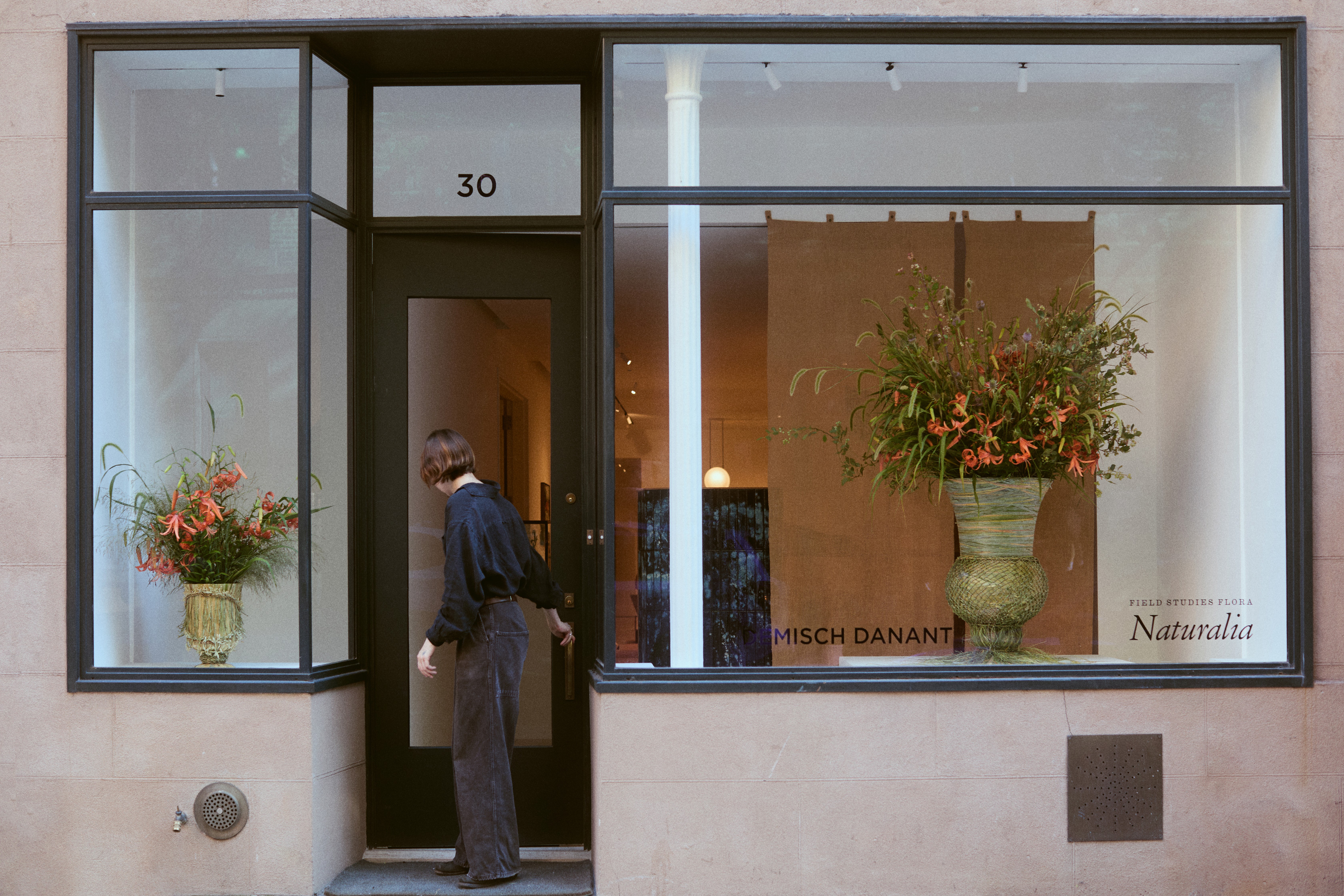
fig i, Mimicking pastoral landscapes, two vessels made from variegated grasses and sedges were placed in the two front windows of the Demisch Danant gallery, presenting an unignorable display of nature's unwavering will to grow where we do. PHOTO: Alyona Kuzmina
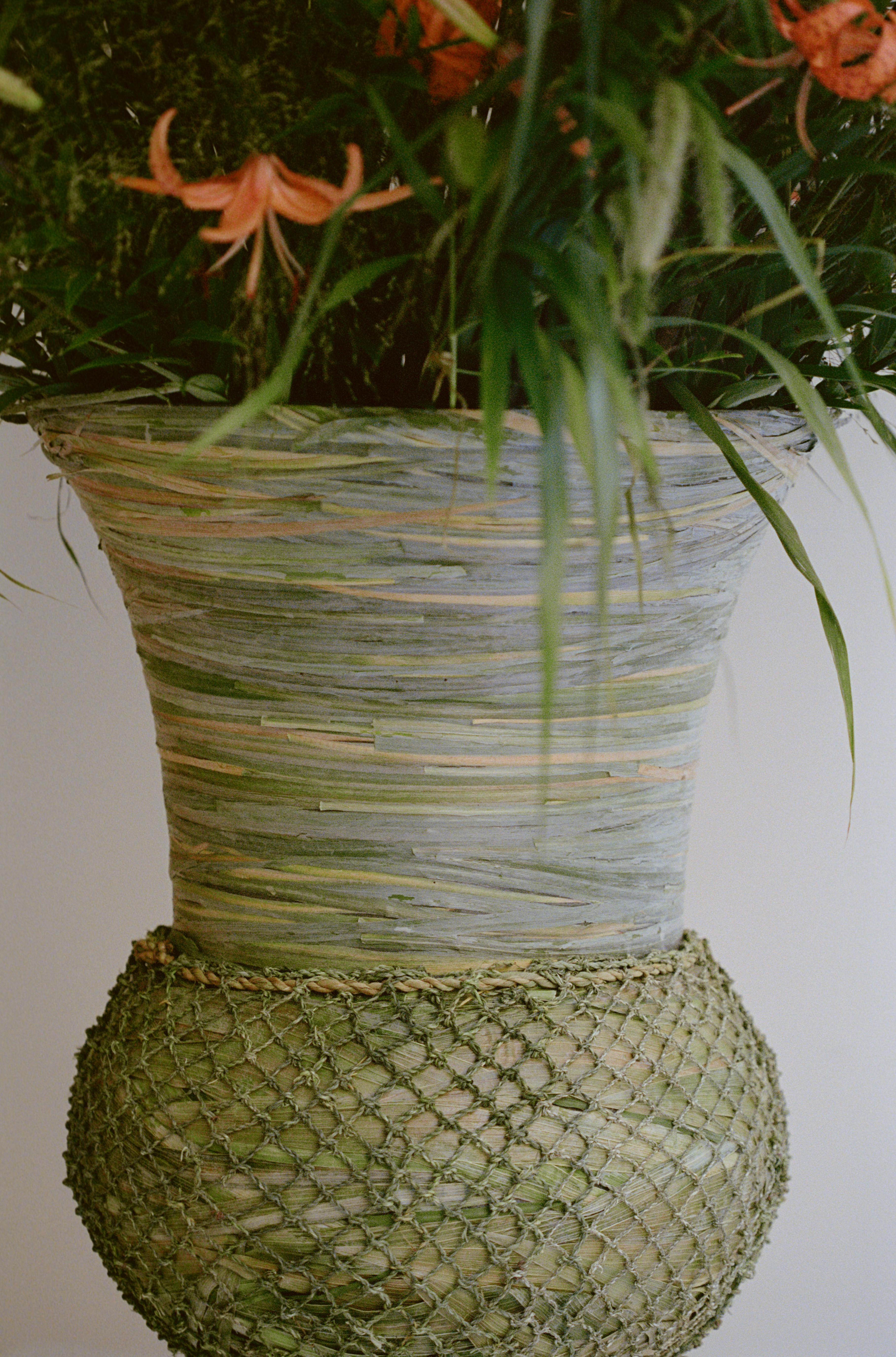
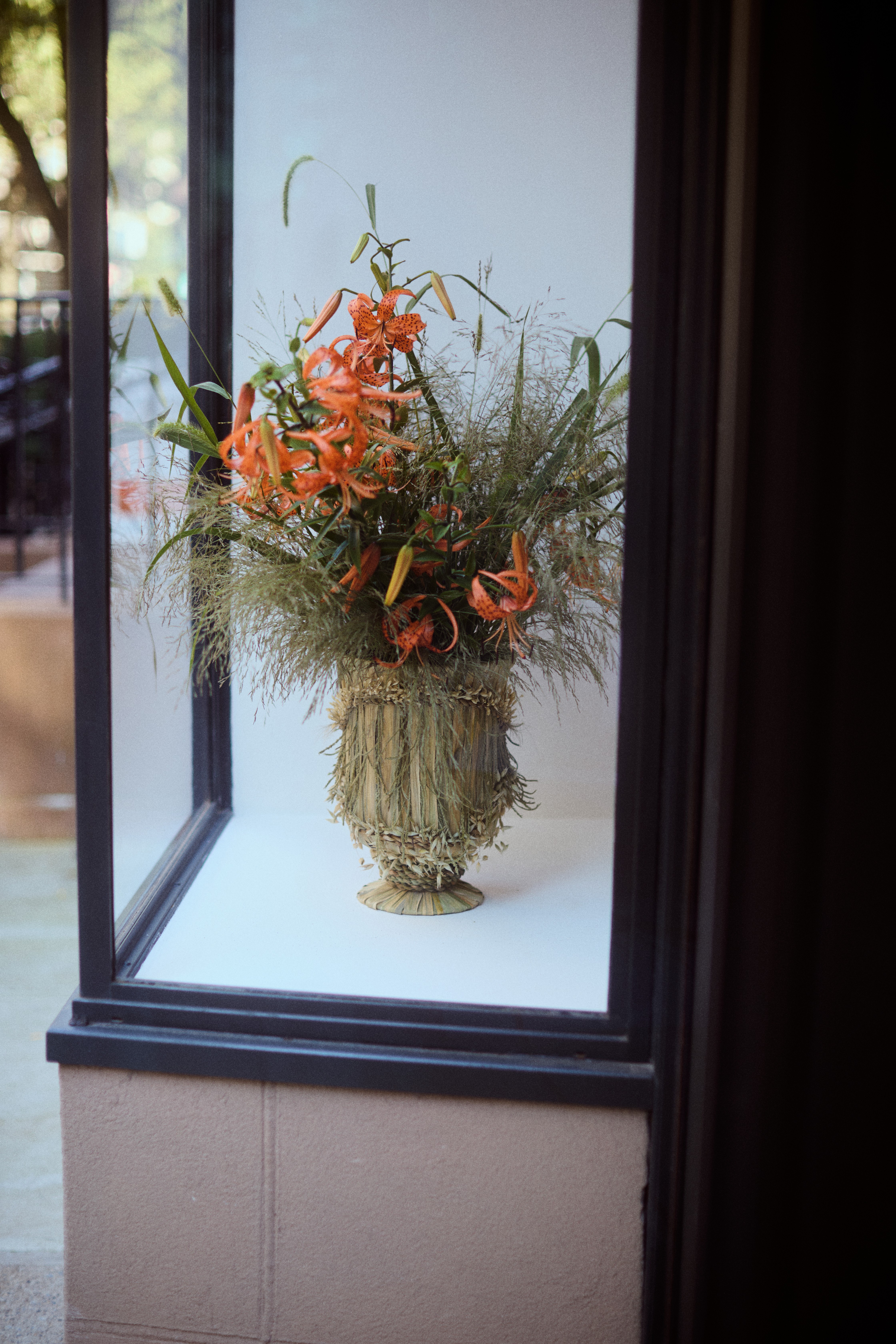
fig II, This living intervention evolved each week of its residency, offering a compelling portrait of the diversity of flora available in one season. In its first iteration, vibrant tiger lillies and blueberry branches filled each grass-wrapped vessel. PHOTO: Alyona Kuzmina
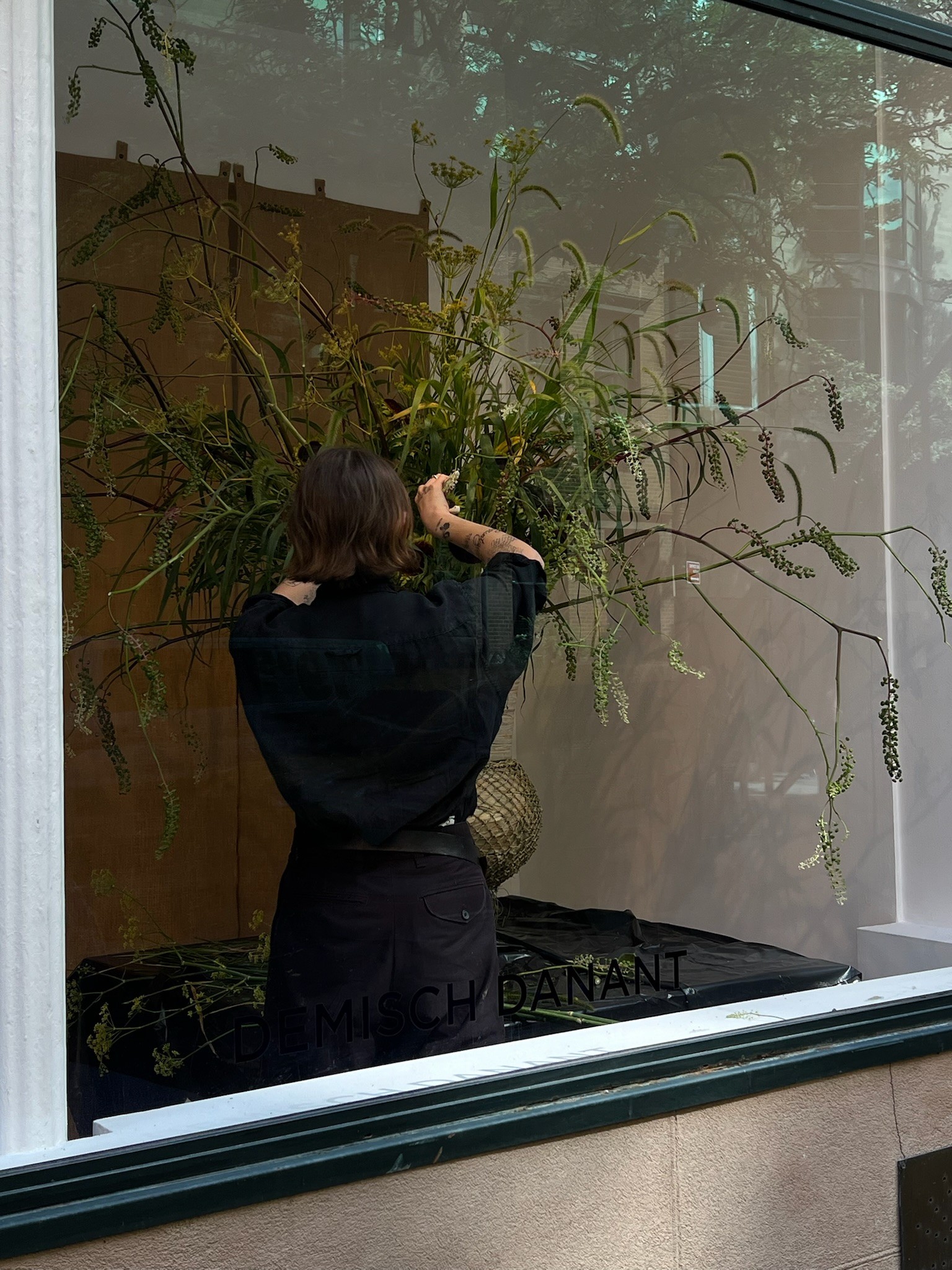
fig III, Closer to the show's end, wild teasel, scraggly crabapple branches, and nodding grasses offered a verdant crowd of inescapable green.
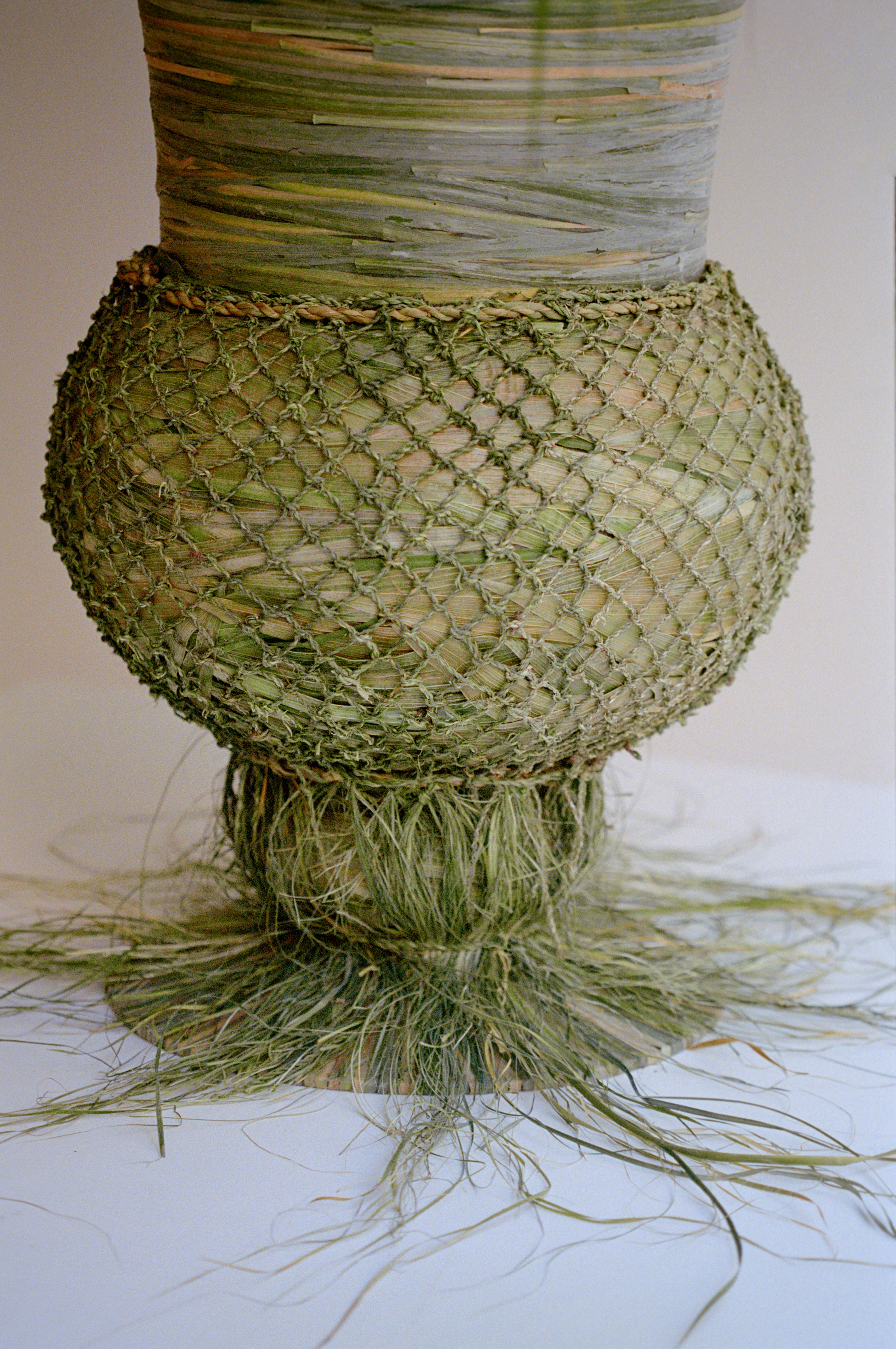
fig iV, This evolving display aimed to prompt its audience into a deeper conversation on innovation, abundance and survival. Photo: Alyona Kuzmina.
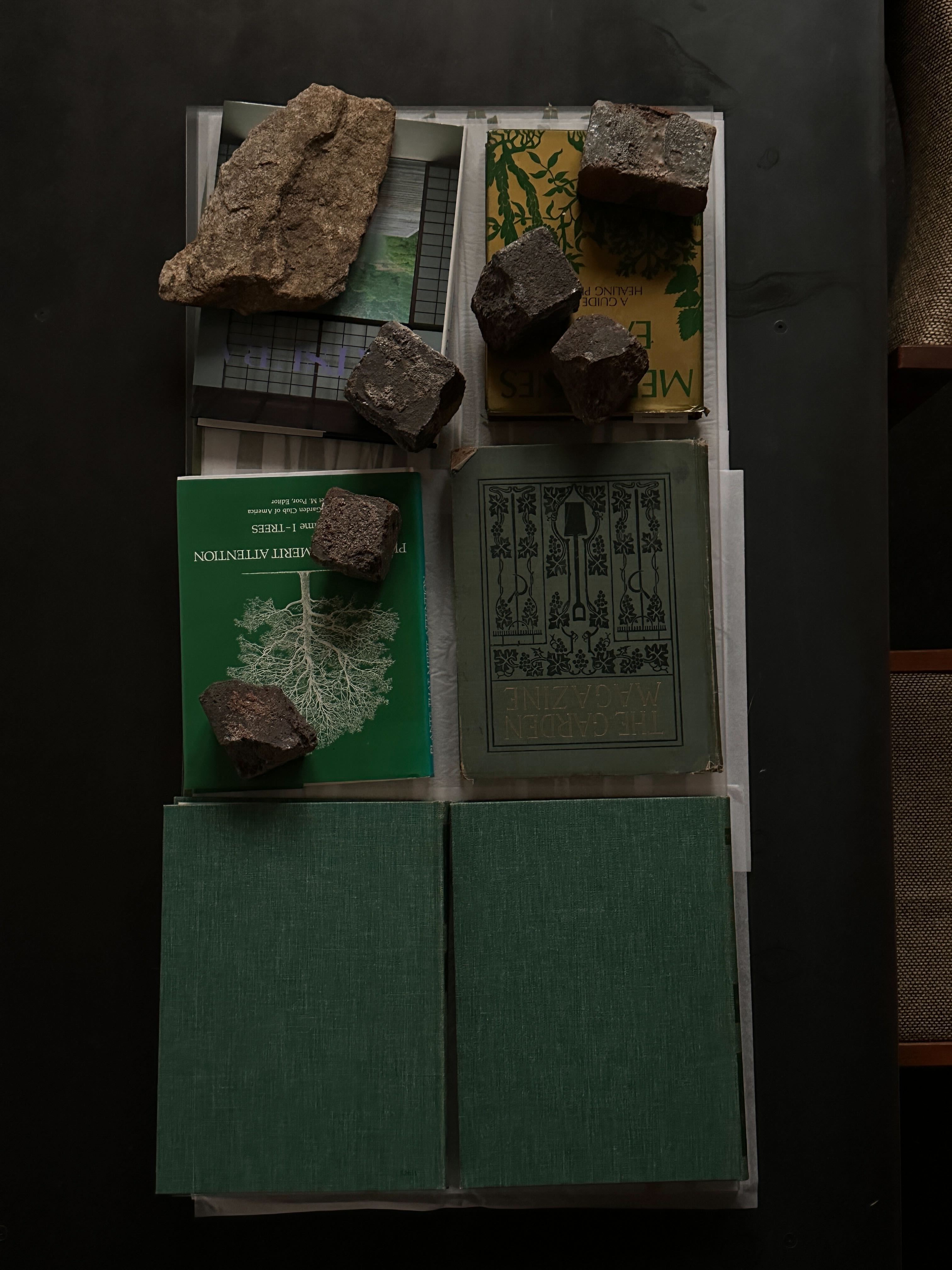
fig V, The process of grass-flattening for the vases was experimental, driven entirely by the curiosity and determination of our team of florists. Many heavy rocks and books from our library really came in handy.
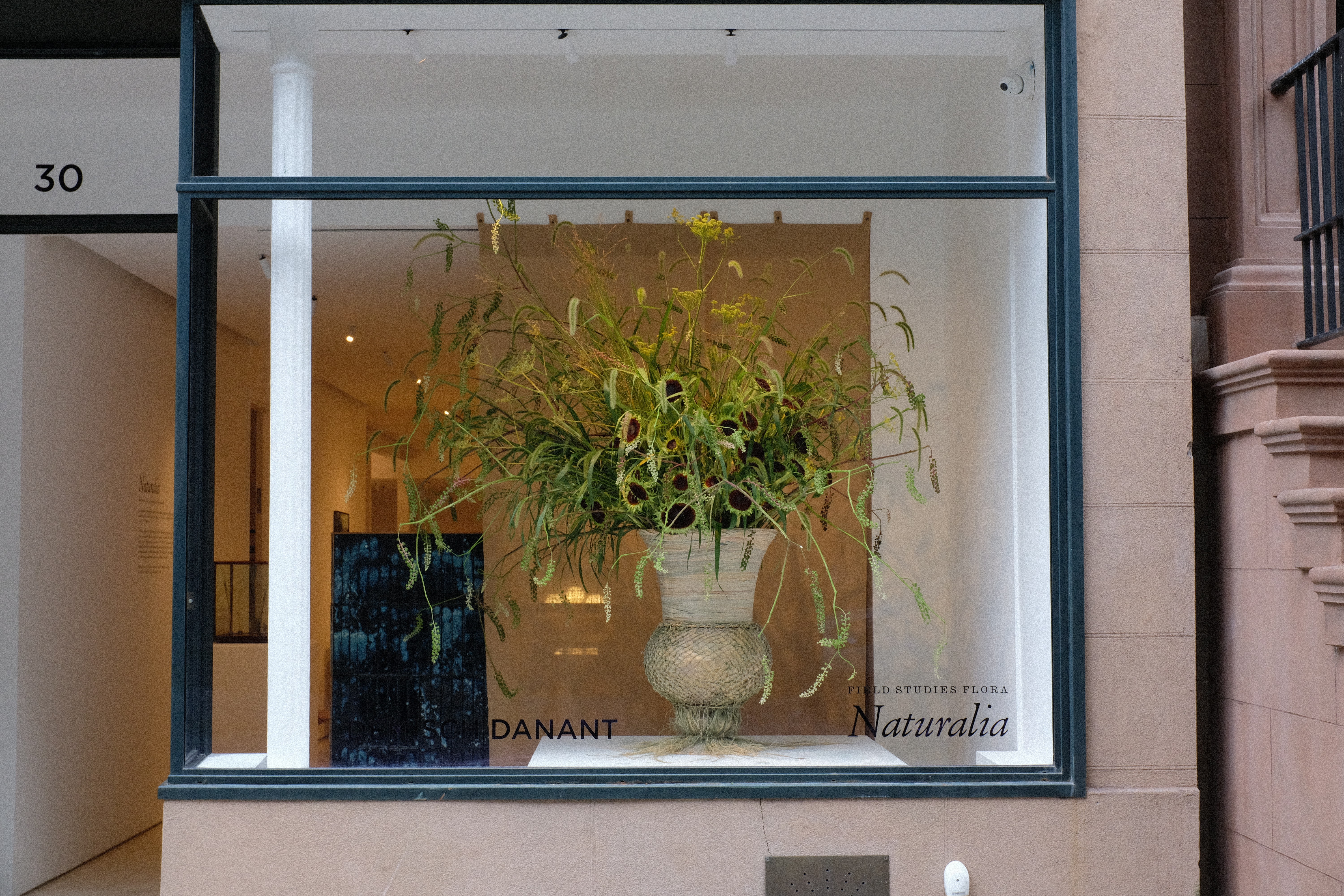
fig VI, Featured in one week of this intervention was wild teasel, a favorite ingredient in the studio. An invasive species in many states, this plant seems to always find a way, outsmarting us all and thriving wherever you might find it. Photo: Kadie Kirkpatrick
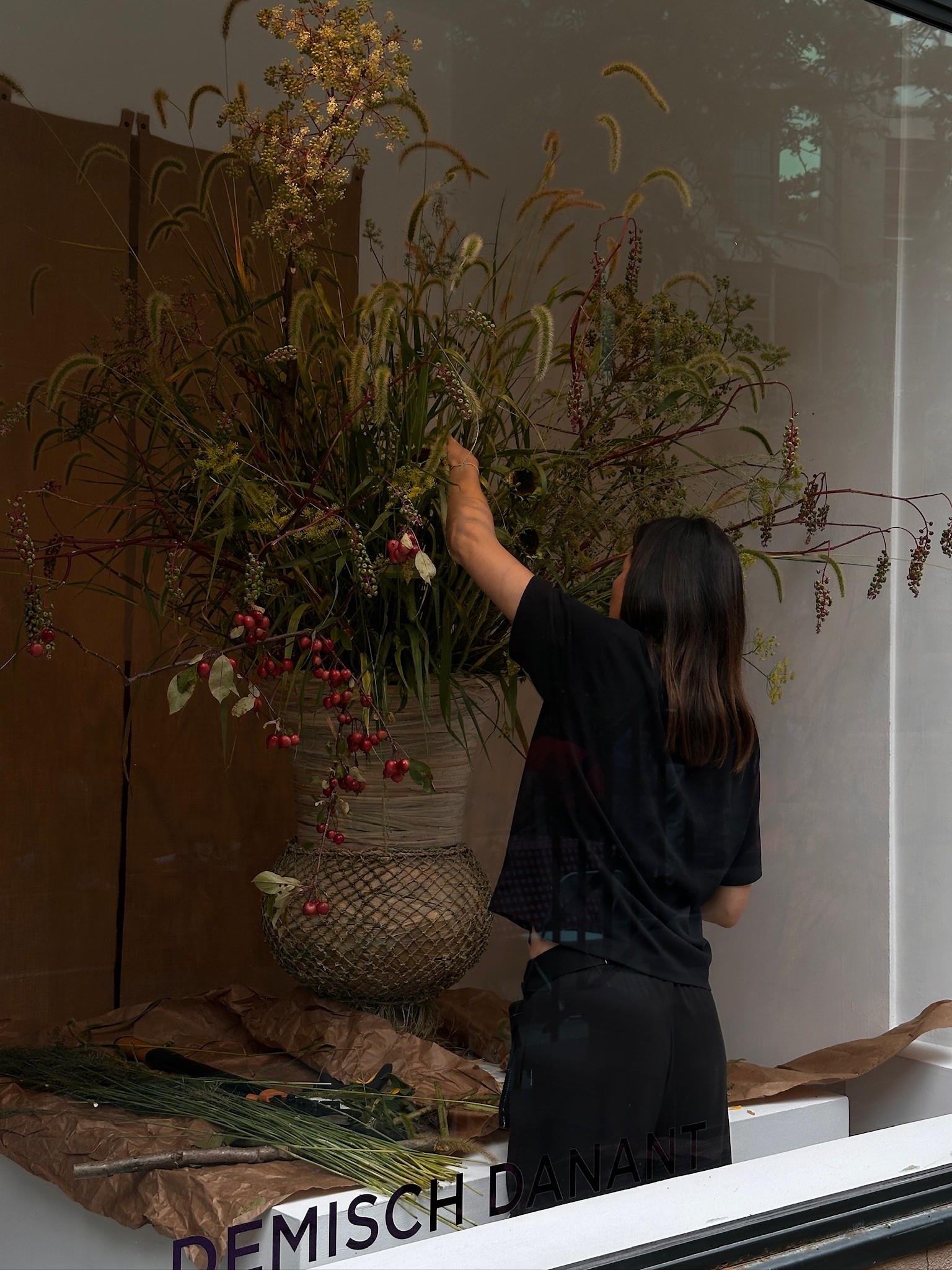
fig VII, Alexia, one of our florists, in the gallery window tending to the wild selection of the seond to last week of Naturalia on view. Photo: Kadie Kirkpatrick
fig i, Mimicking pastoral landscapes, two vessels made from variegated grasses and sedges were placed in the two front windows of the Demisch Danant gallery, presenting an unignorable display of nature's unwavering will to grow where we do. PHOTO: Alyona Kuzmina
fig II, This living intervention evolved each week of its residency, offering a compelling portrait of the diversity of flora available in one season. In its first iteration, vibrant tiger lillies and blueberry branches filled each grass-wrapped vessel. PHOTO: Alyona Kuzmina
fig III, Closer to the show's end, wild teasel, scraggly crabapple branches, and nodding grasses offered a verdant crowd of inescapable green.
fig iV, This evolving display aimed to prompt its audience into a deeper conversation on innovation, abundance and survival. Photo: Alyona Kuzmina.
fig V, The process of grass-flattening for the vases was experimental, driven entirely by the curiosity and determination of our team of florists. Many heavy rocks and books from our library really came in handy.
fig VI, Featured in one week of this intervention was wild teasel, a favorite ingredient in the studio. An invasive species in many states, this plant seems to always find a way, outsmarting us all and thriving wherever you might find it. Photo: Kadie Kirkpatrick
fig VII, Alexia, one of our florists, in the gallery window tending to the wild selection of the seond to last week of Naturalia on view. Photo: Kadie Kirkpatrick
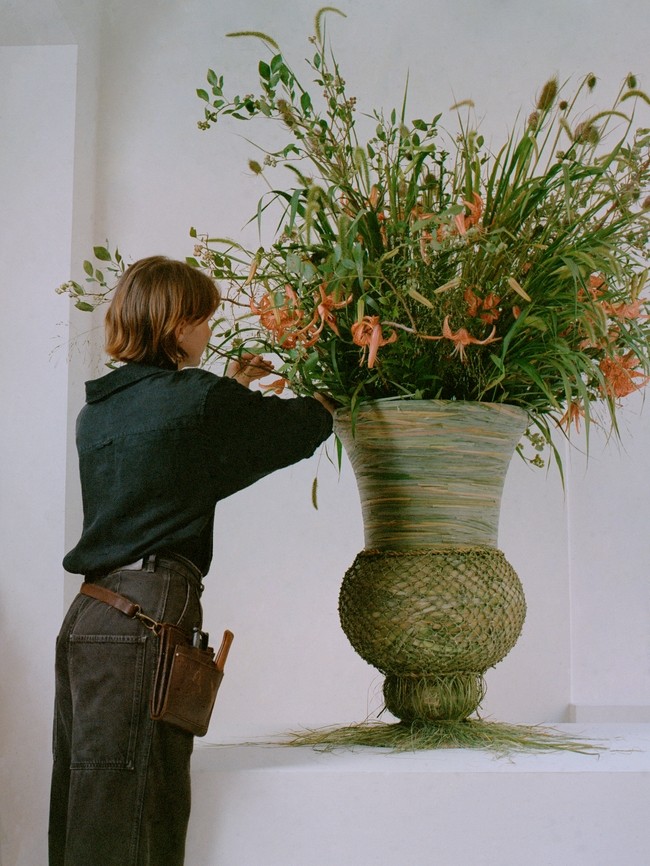
Fig I, Shown above, our Senior Designer Kadie Kirkpatrick is seen tending to the first iteration of the installation which featured vibrant tiger lillies and blueberry branches. Photo: Alyona Kuzmina
We view floristry as a collaboration with the natural world, often asking ourselves—what we are creating? How might we reawaken each other to the beauty that grows alongside, and often, in spite of us? With Naturalia at Demisch Danant, our studio asked these questions by presenting three scenes reminiscent of pastoral summer landscapes housed in hand-made vessels conjured from the same abundant material: grasses, verdant foliage, and sedges.
From July 23, 2025 through early September, the ideologies and principles that guide our work overtook the two front windows of this iconic gallery[1]. Exclusively showcasing flora sourced from within 200 miles of Manhattan's West Village neighborhood, each week, the flowers housed in these constructed vessels[2] evolved, offering a compelling portrait of the diversity of flora that's available in a singular season.
[1] Demisch Danant’s Store Front series is an exploration of the intersection of architecture, design and art. Seasonally, multidisciplinary artists and designers contribute to the series through thoughtfully thematic installations where they apply their unique perspective on structure, form, and architecture to provoke the senses, instigate curiosity in passersby and contribute to the cultural experience of the neighborhood.
[2] Crocheted textiles and nautical rope-making informed our thought process of how we could dress each vessel. The nature of this visual in itself spoke to themes of resilience, strength, and abundance.
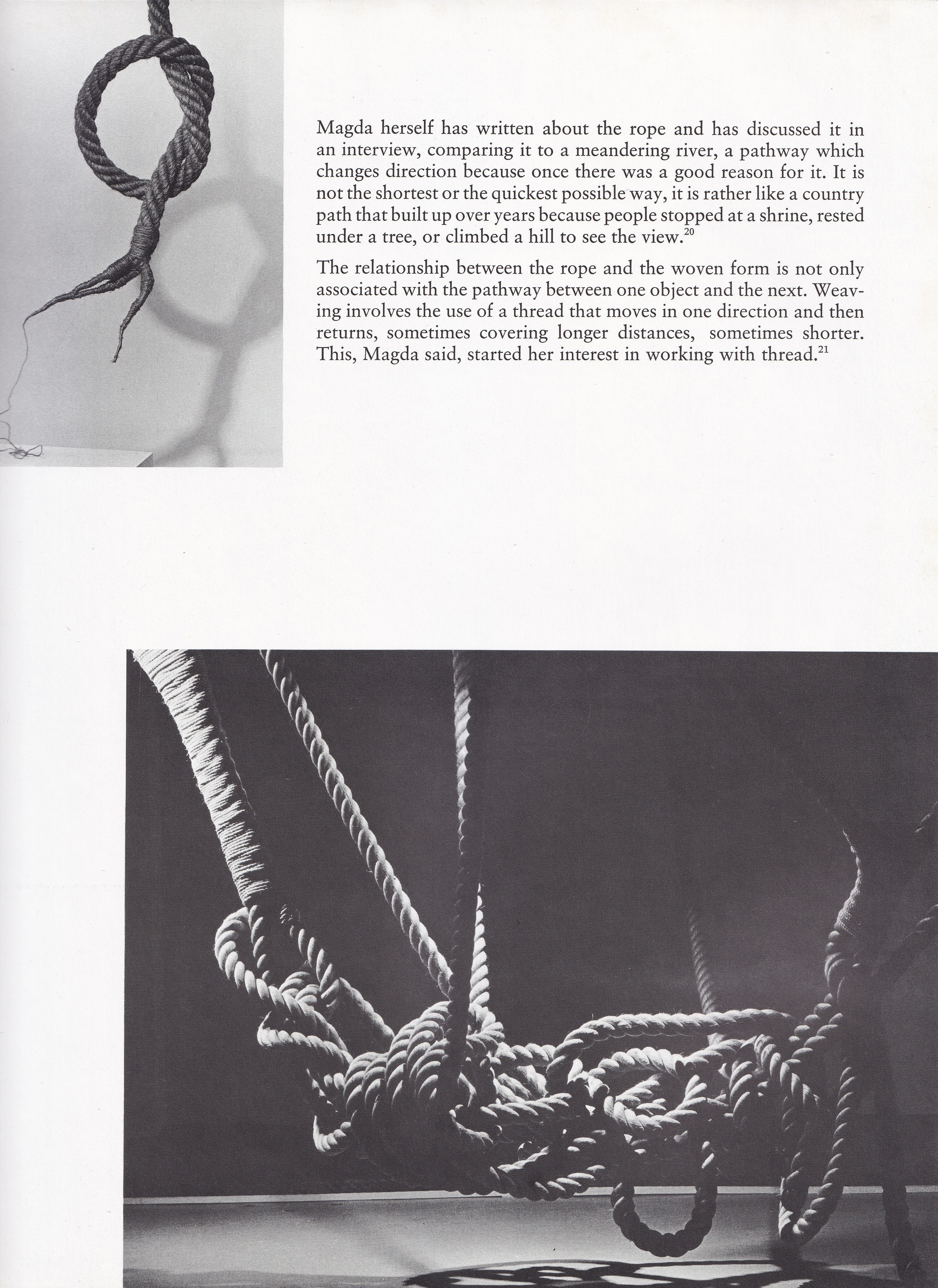
Fig II, The rope netted around the belly of the vase was made by hand in our studio. Alex and Kadie created over 300 feet of it in a manner of days. Inspired by crochet dresses and nautical netting, we studied the fiber sculptures of Magdalena Abakanowicz[3] and the texture of raw linen to decipher just how we wanted to approach these delicate yet headstrong elements of natural strength.
Alongside every habitat we disturb or demolish, we create another. Look no further than the rogue crabgrass climbing onward, pushing through concrete and asphalt, reaching across train tracks and rooflines, to witness Nature’s unwavering will to persevere and collaborate. This signaling of adamant survival was what prompted our use of grass and leaves, arguably the most abundant flora during the summer months.
Florists often turn to grass as more of a filler for arrangements showcasing larger, showy flowers as the headliner. Precisely the opposite, we envisioned the vessels of this exhibition to be unapologetically grassy with each one offering an illusion of self-held structures that were comprised only of pressed leaves, blades of grass,[3] inflorescence, and ropes made of combed cattail leaves.
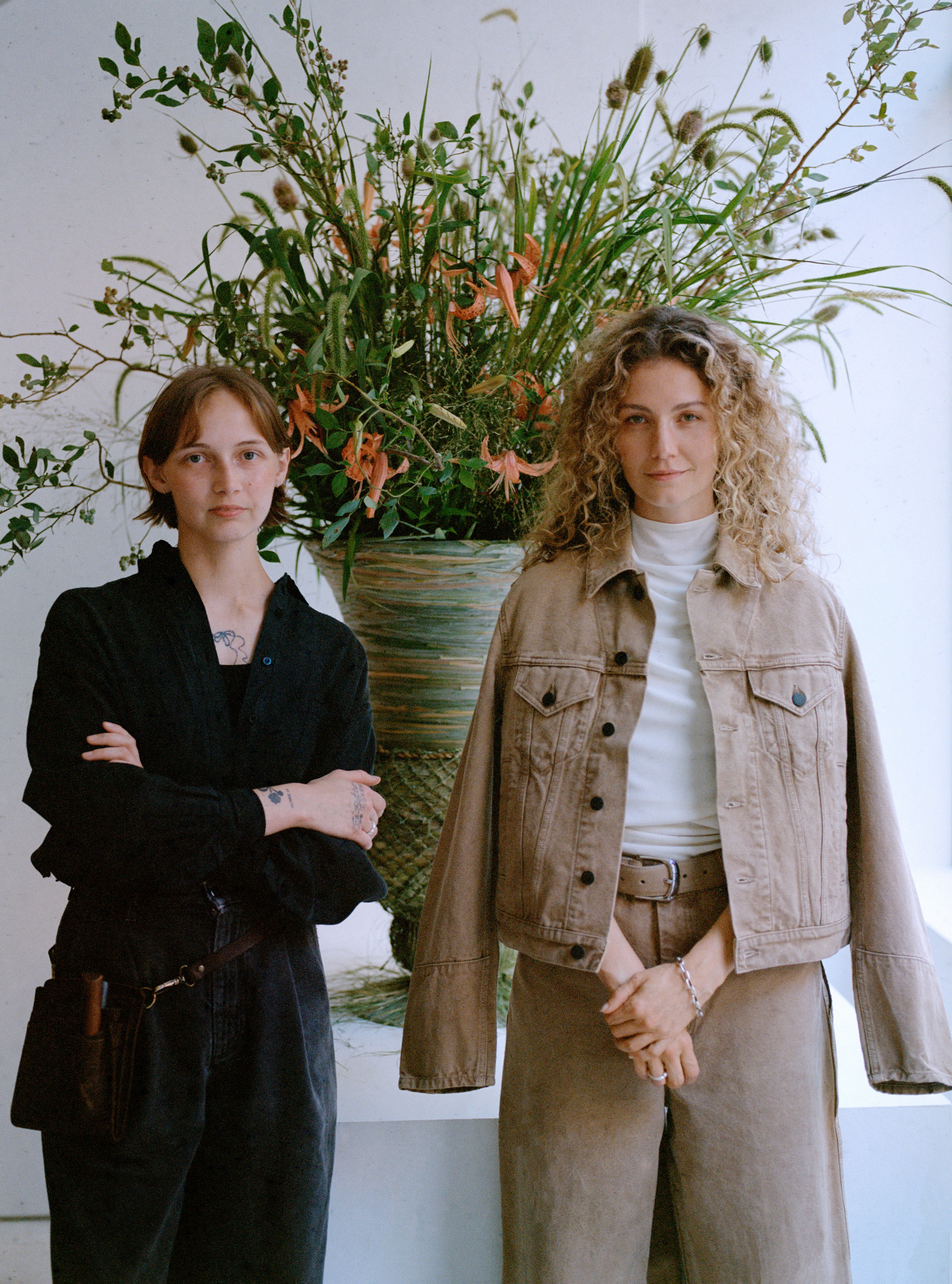
[3], Thousands of iris leaves, individual blades of grass and sedges were pressed one by one at our studio in the making of these vessels. Through sheer determination and experimentation with heavy books and heavier rocks, this was done in just a few short weeks by Alex and Kadie, our Senior Designer. Photo: Alyona Kuzmina.
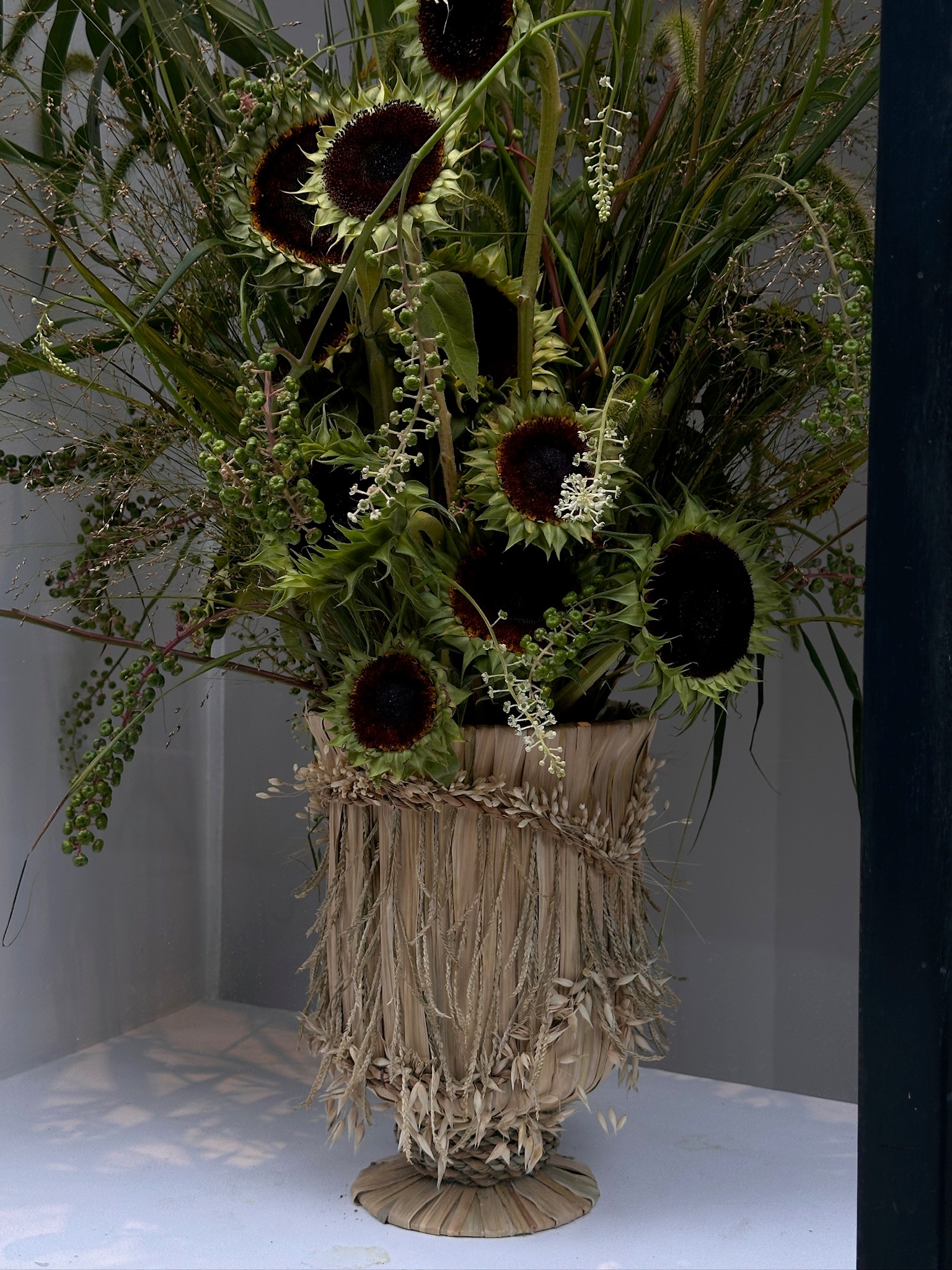
[4] The smaller of the two front displays, our team often had to tame the emotive inflorescence springing out of its sides like cowlicks.
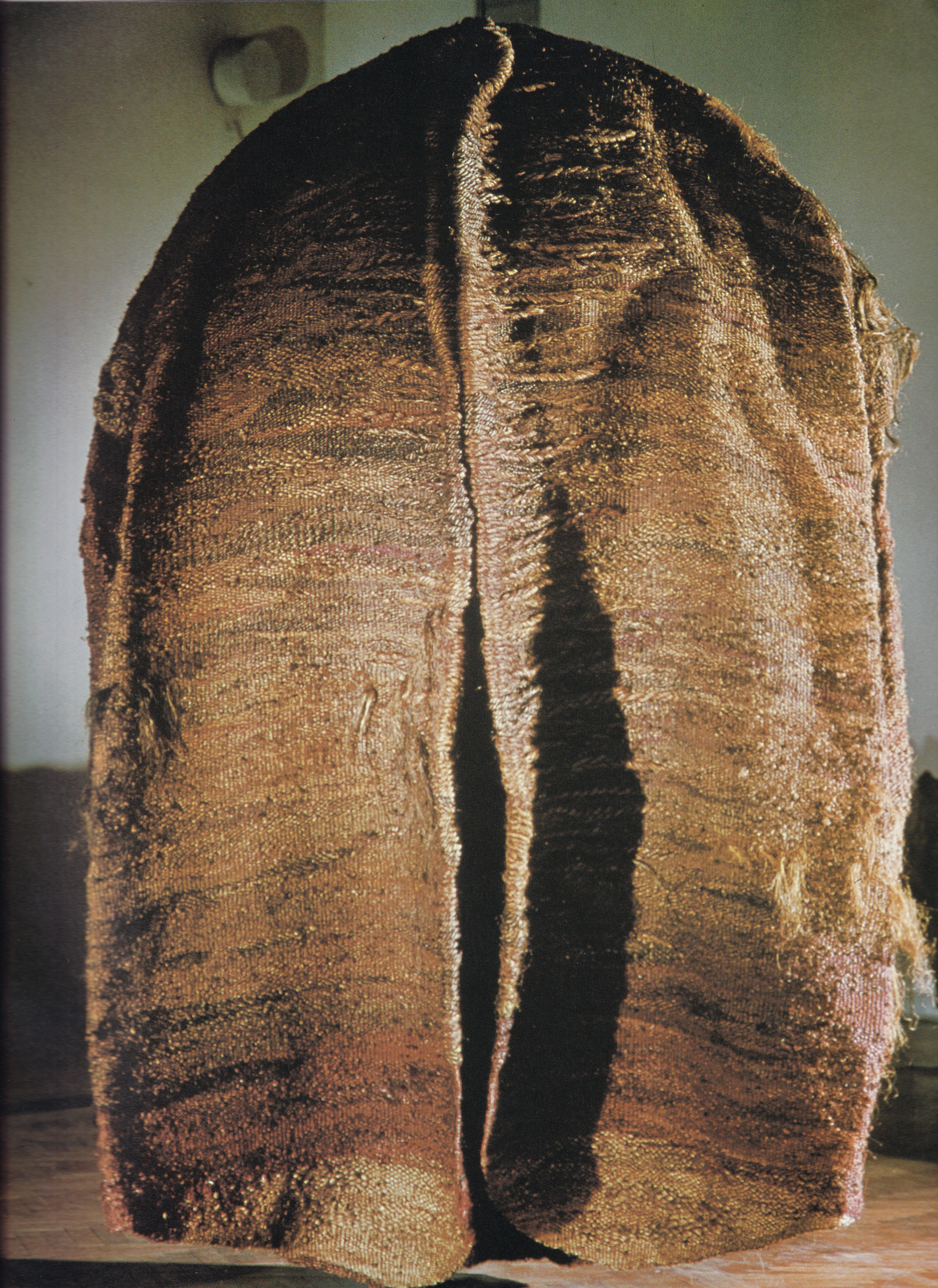
Fig III, Scanned in from our library, a page from the collective works of Magdalena Abakanowicz by the Museum of Contemporary Art Chicago, published in 1982.
To cover each vase, blades of hand-flattened grass were wheat-pasted directly onto the objects, each of which were 3D-printed from corn in the classic forms of traditional floral vessels.
For inspiration during this tedious process, we looked to the works of Magdalena Abakanowicz, a prominent Polish artist in the 1960s and a pioneer of fiber-based sculpture and installation. Radical and entirely open to interpretation, her works were layered in abstract intentionality. She once said that "art does not solve problems but makes us aware of their existence..." She went on to say that "we find out about ourselves only when we take risks, when we challenge and question." This sentiment was very much at the root of Naturalia, an experiment with material—grass—that pushed our team in just a few fleeting weeks to make something enduring out of something inherently ephemeral.
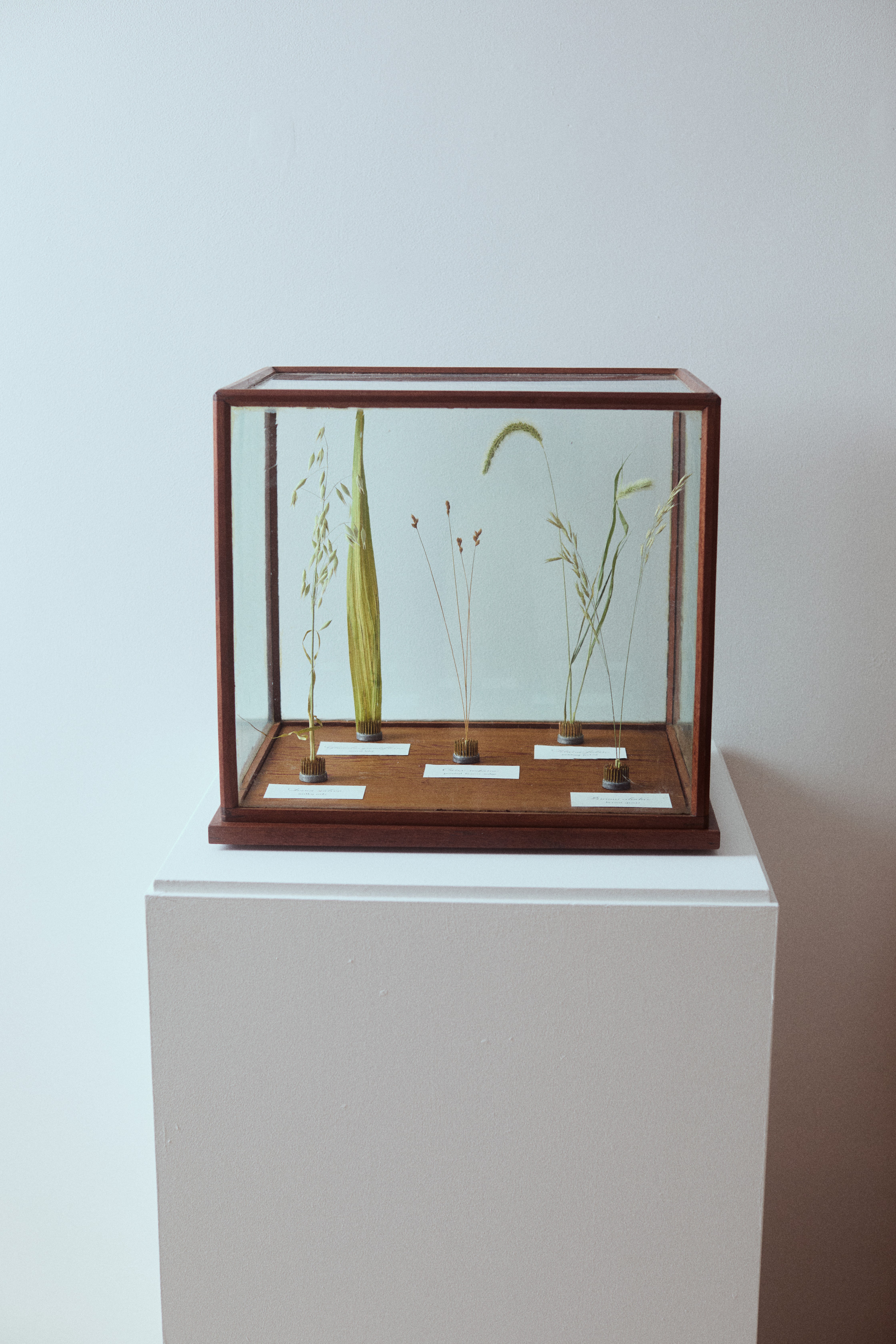
[3] On display in tandem with the three vessels staged throughout the gallery was a shadowbox of select grasses. Tall and solitary, these five specimens made a case for the idiosyncratic beauty of each individual blade, wisp and husk.
Elements (3)
View Index
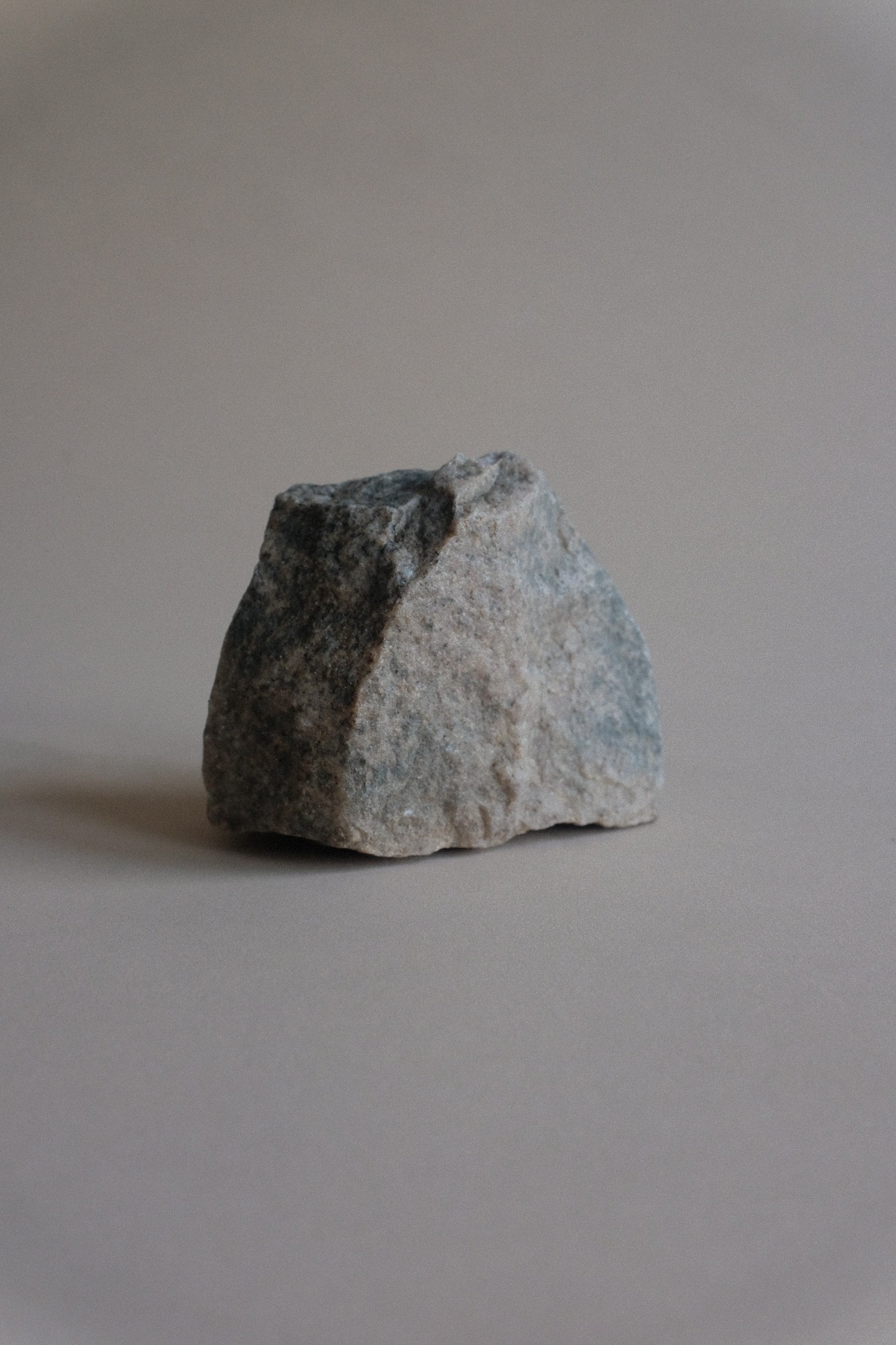
A collectors item for those who know. Our studio is slowly amassing a stockpile of these ancient heirlooms whether from our own collections or gifted to us by friends of the studio. Time is made no more visible in any other creation on earth, than stone. We use them to cover floral frogs, as weights inside vessels to keep them from overturning, or as adornment to a tablescape, earning equal billing to the blooms.
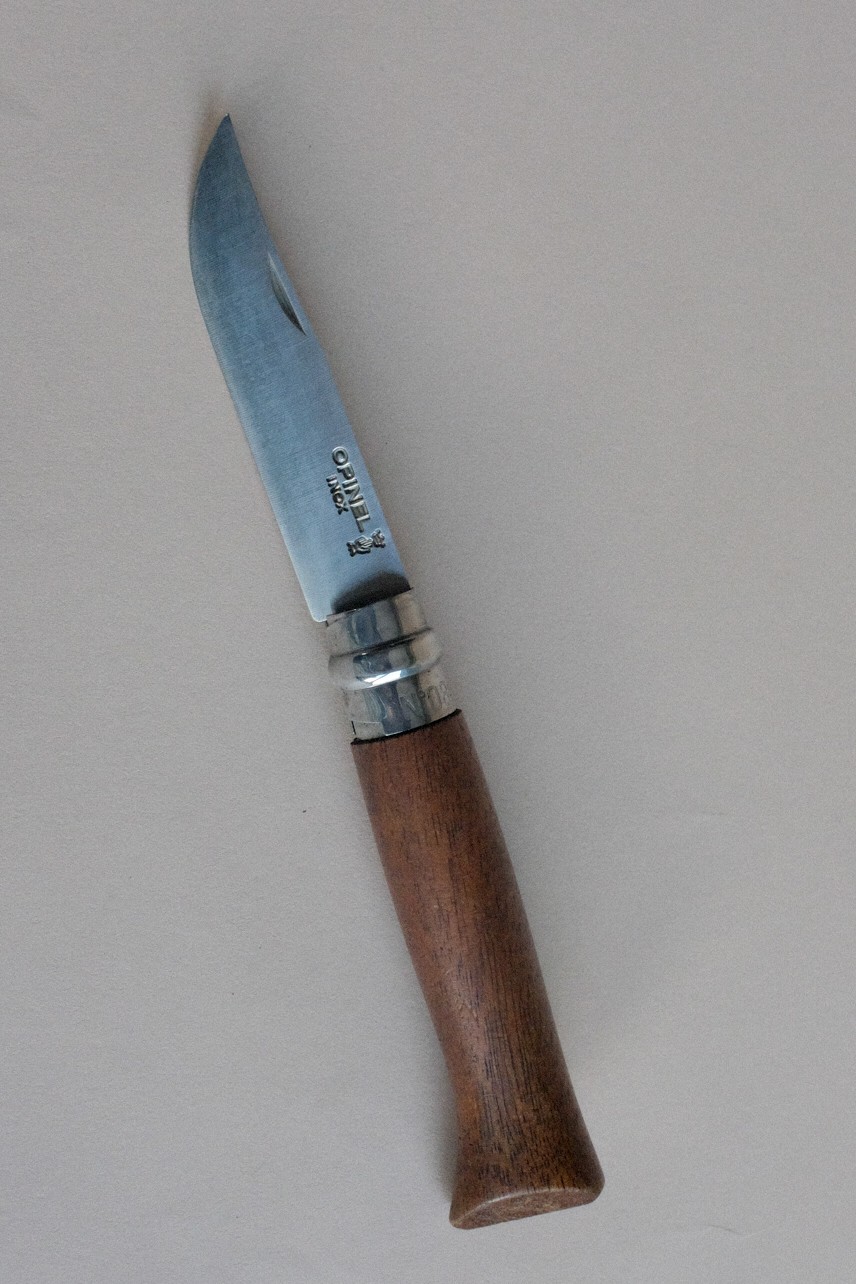
A florist without tools is like a flower without water. You’d be hard-pressed to find our founder Alex Crowder without her go-to folding knife, Opinel No. 8. A classic, these knives have been hand-crafted in France since 1890. As the makers put it, this blade is perfect for everything from “sharpening your pencils to pruning your roses.”
Archive
Archive
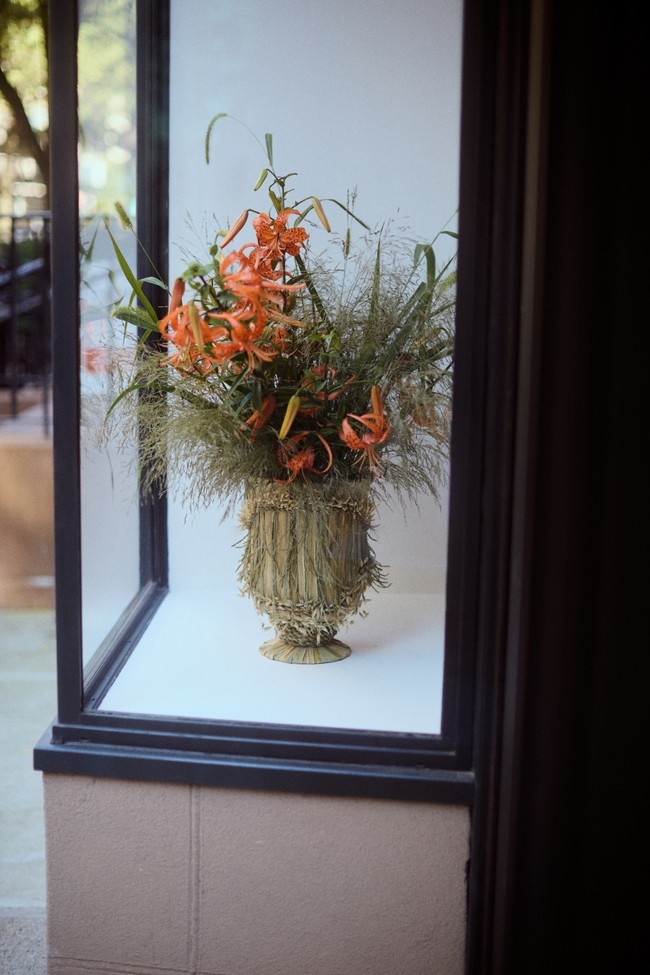
Vibrant tiger lillies and blueberry branches. Photo: Alyona Kuzmina.
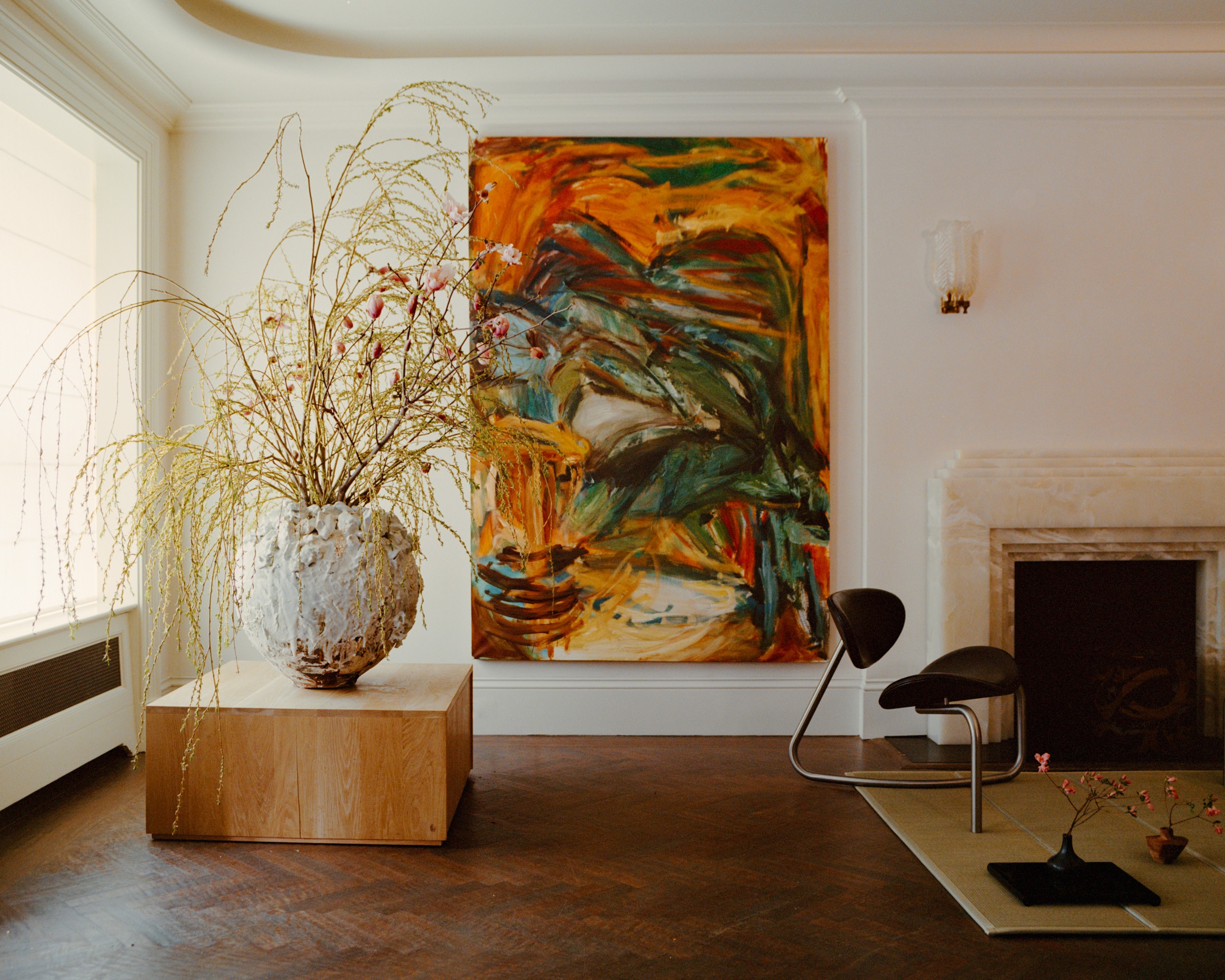
Magnolia, weeping willow and azalea buds inside of a tranquil space designed by Rob Johansen and photographed by William Jess Laird.
Orange tiger lilies in a subtle yet significant vessel in the back room of Somerset House. Photo: Marco Galloway
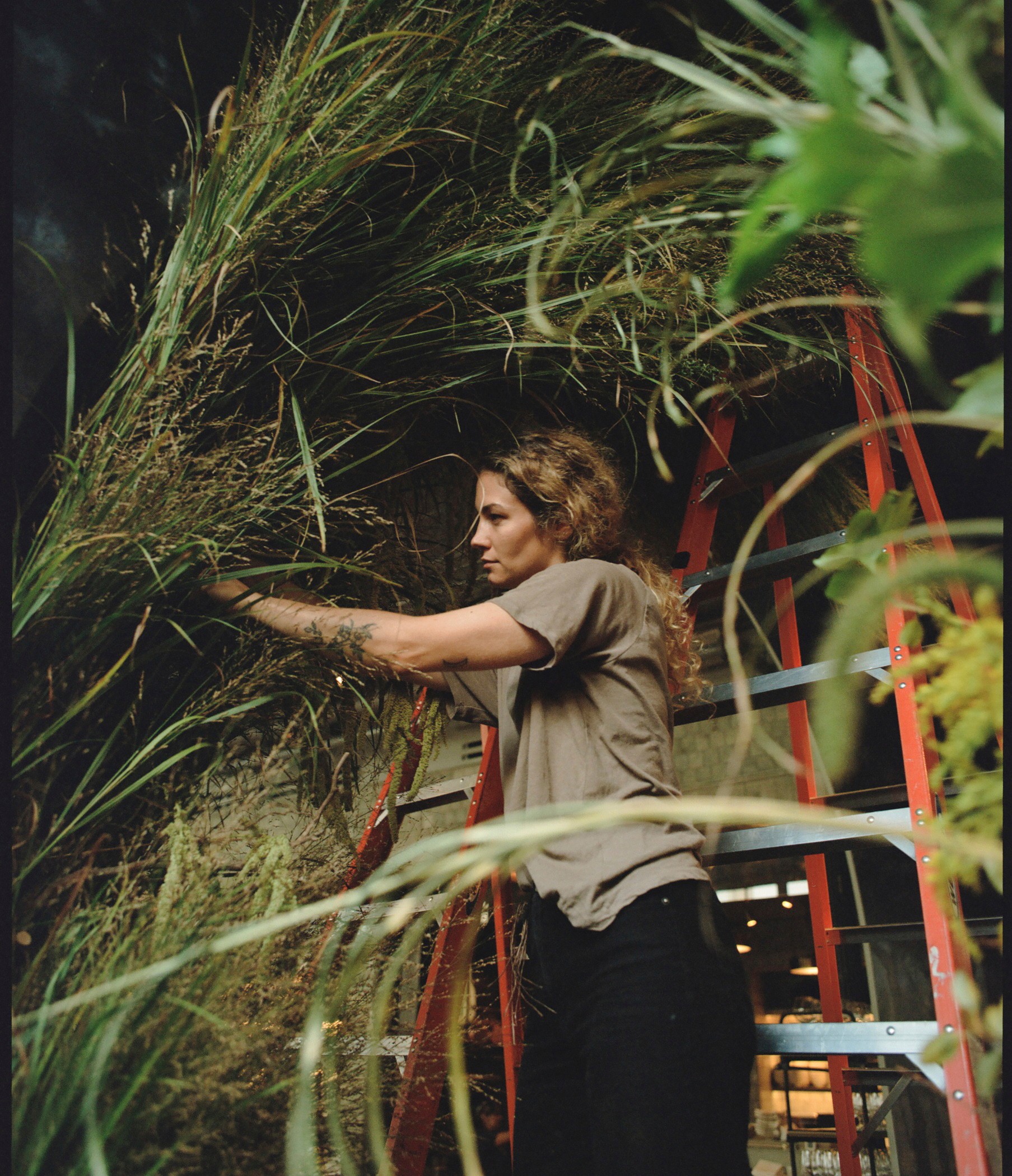
The archway at Roman & Williams, adorned in late summer’s finest foraged greens. A slurry of grasses were nestled into an armature of mountain laurel and garnished with long green-bean-looking catalpa pods to create this vertical meadow of fringe which crawls 14 feet up the wall and arcs over guest below. Photo: Austin Sandhaus
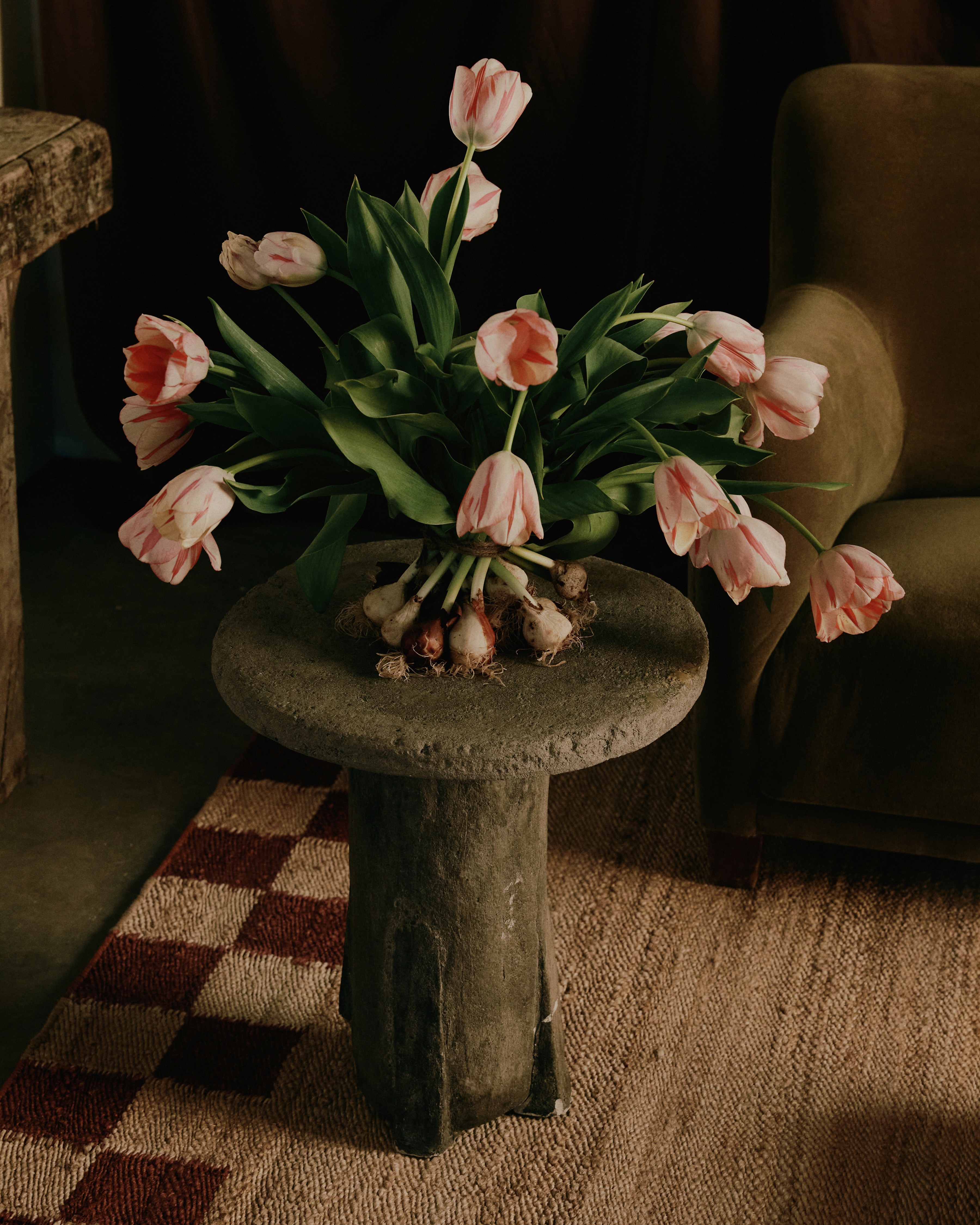
Tulip season for Nordic Knots shot and styled at Galerie Was. Photo: William Jess Laird
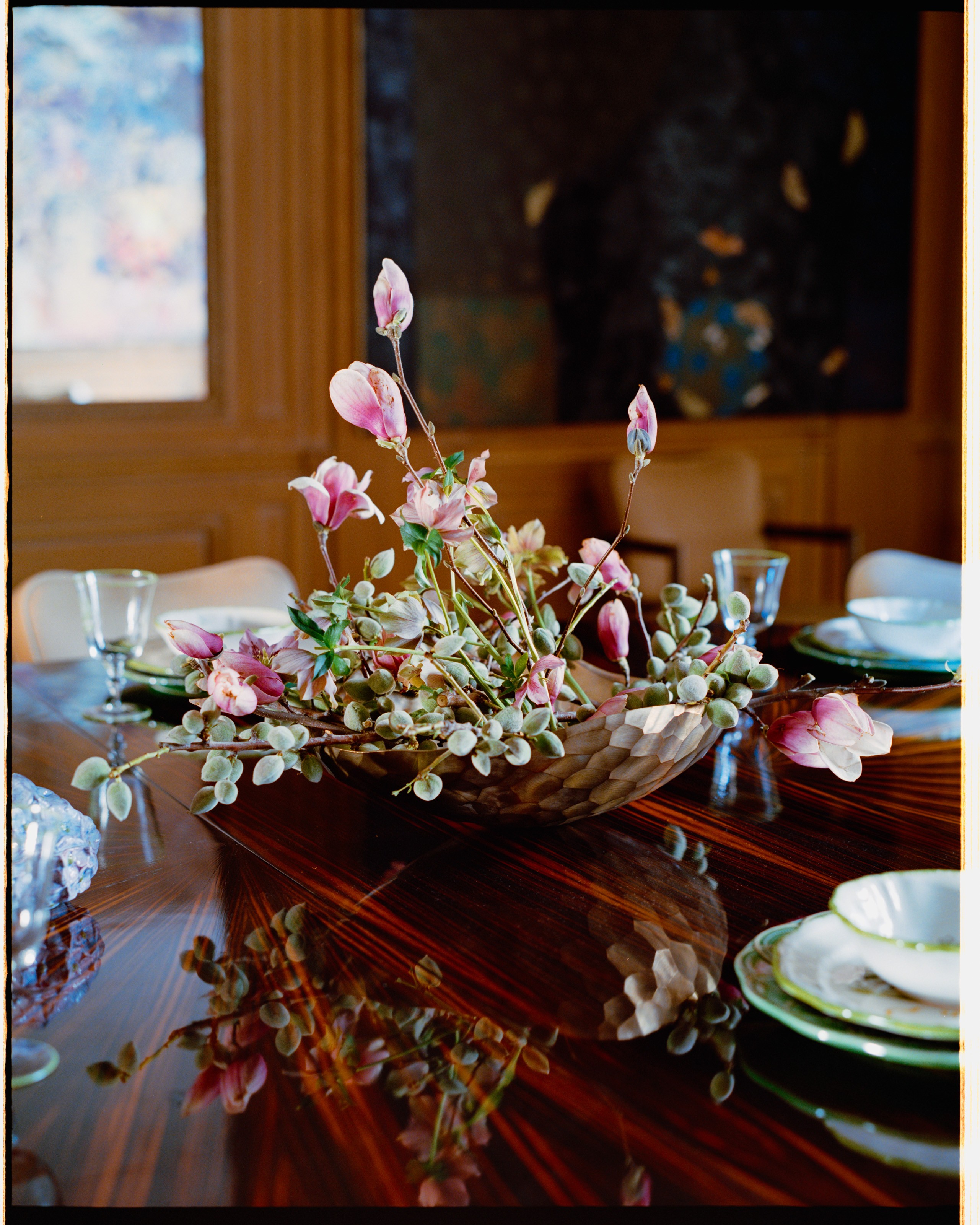
Magnolia, hellebores and almond husks inside of a garden-inspired dining space designed by Rob Johansen.Photo: William Jess Laird.
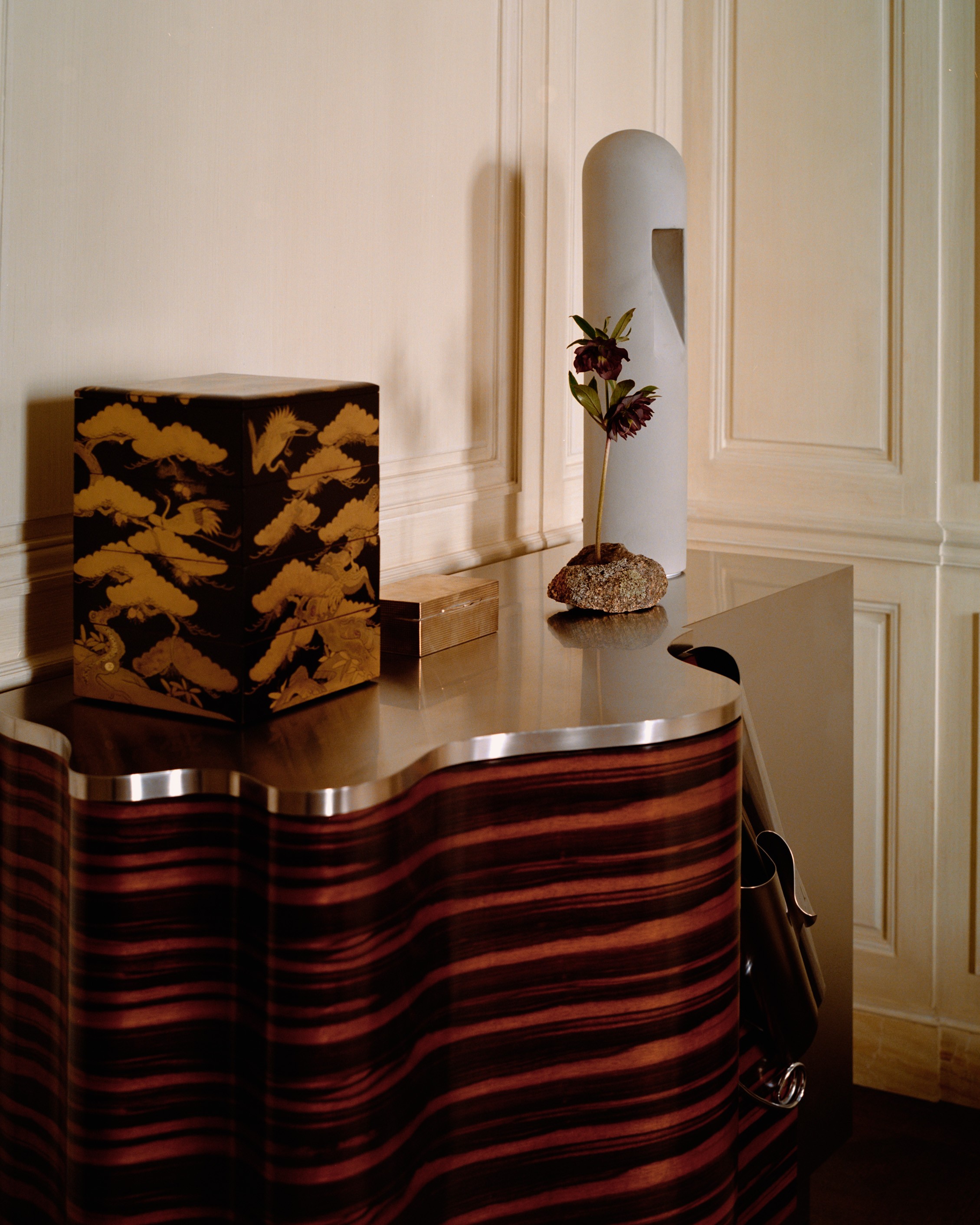
A single Hellebore stem inside of an apartment designed by Rob Johansen.Photo: William Jess Laird.
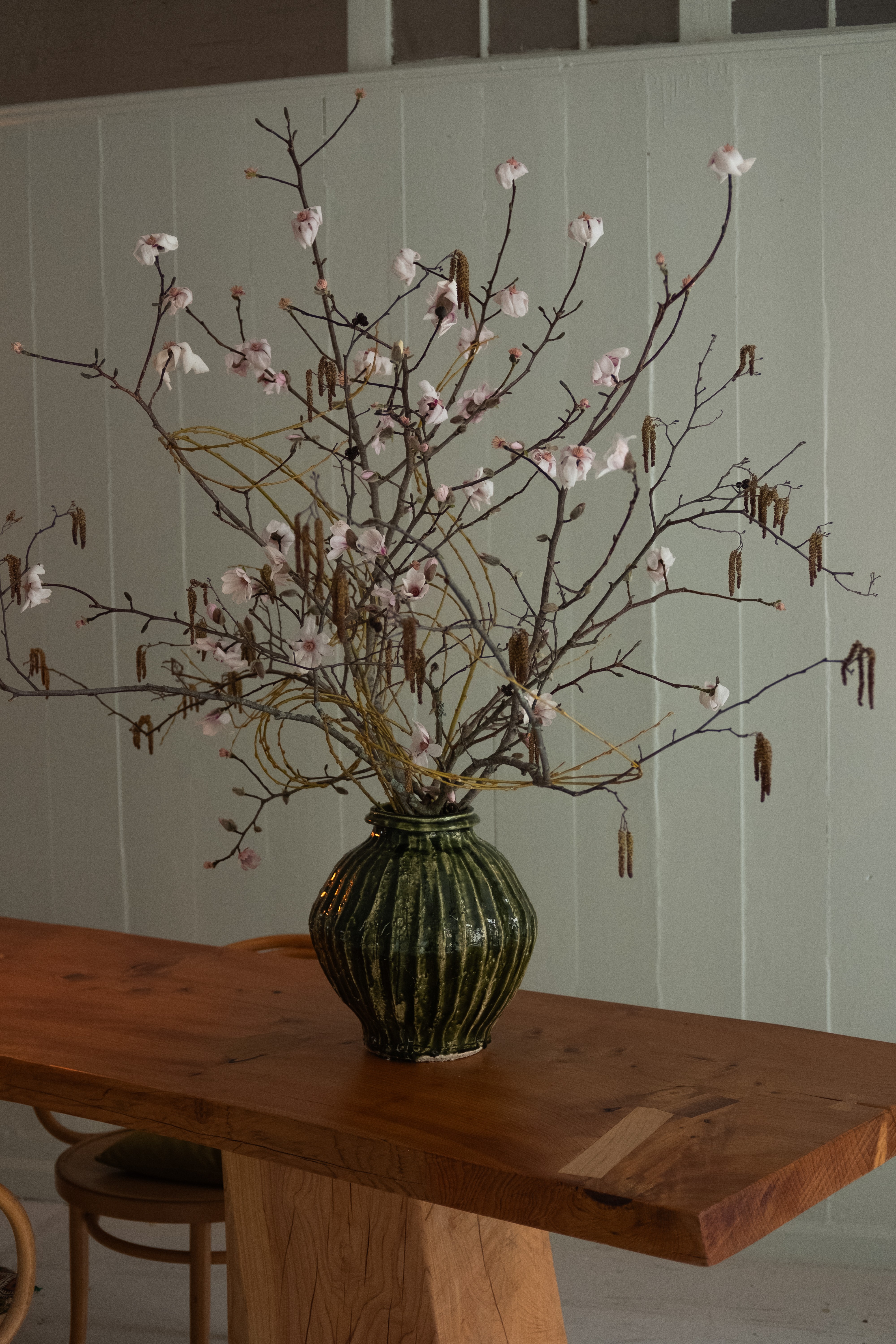
A beloved trine: magnolia, willow and birch with catkins. This was the entryway intervention at Tiwa Gallery for our dear friend Cadis' show. Photo: Field Studies Flora
A private spring luncheon at La Mercerie. Photo: Andrea Gentl and Martin Hyers
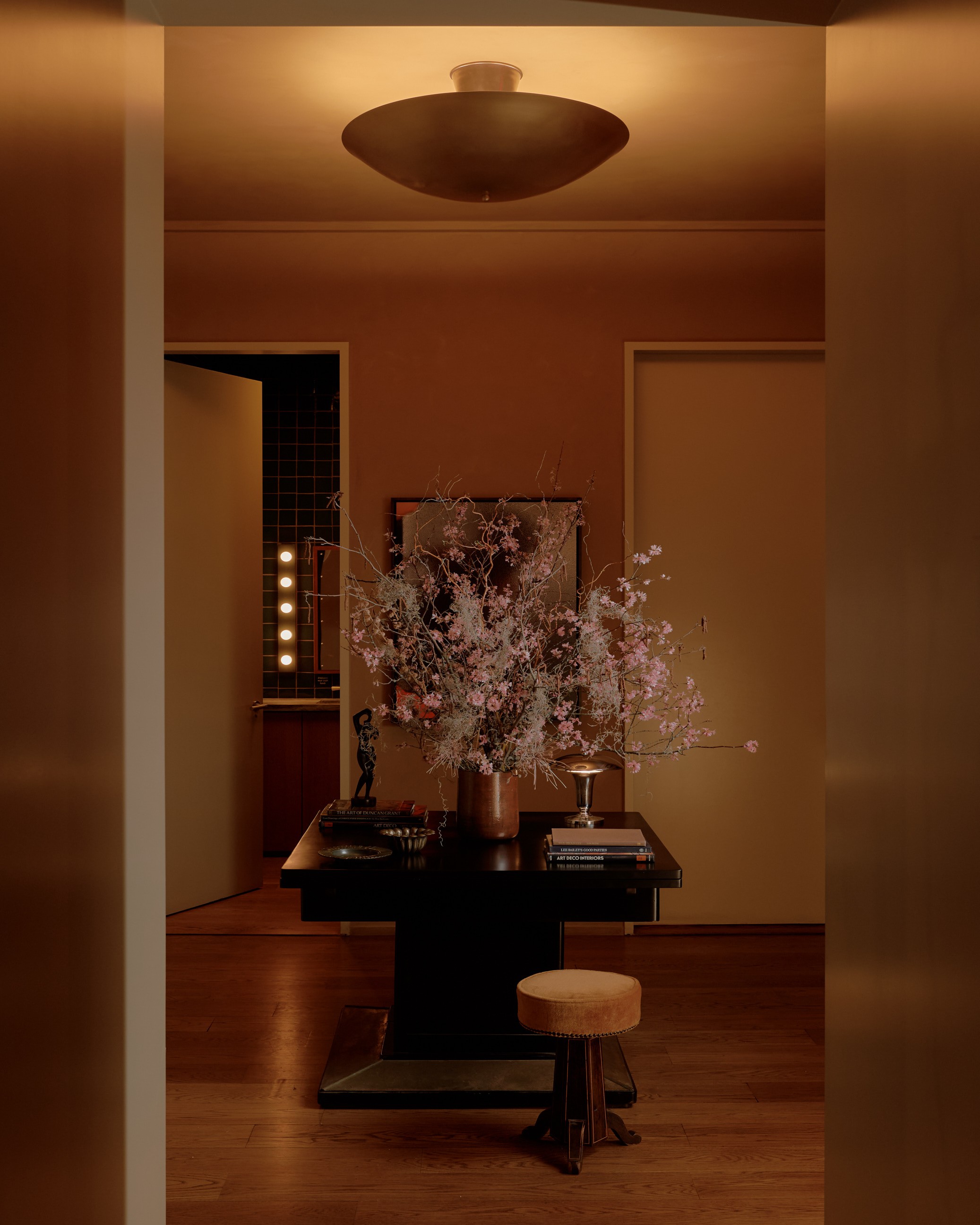
Frothy cherry and Spanish moss displayed in the antechamber of Quarters. Styling: Tim Brown, Photo: William Jess Laird
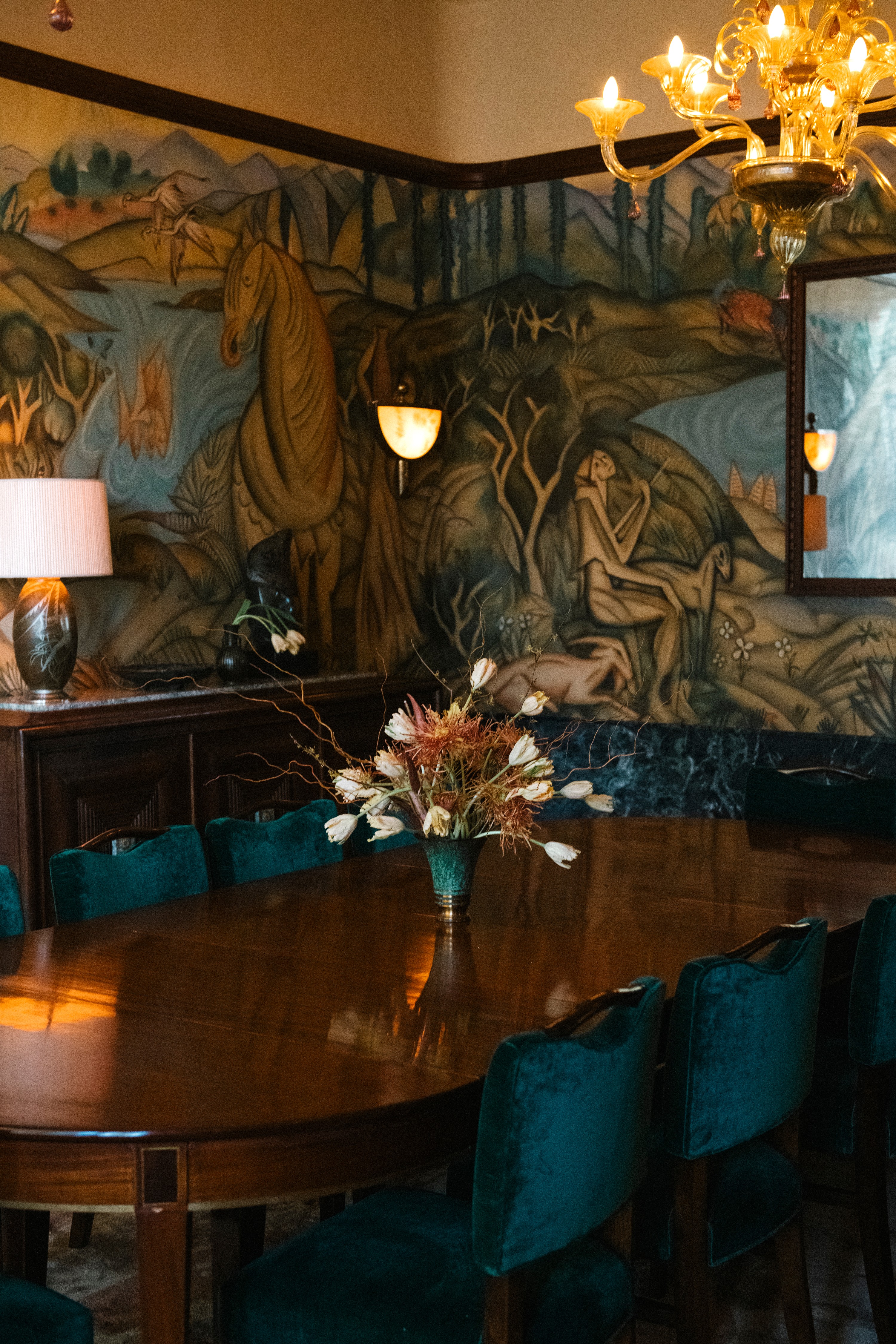
Inside the hand painted private dining room at Locanda Verde Hudson Yards. Photo: Adrianna Glaviano.
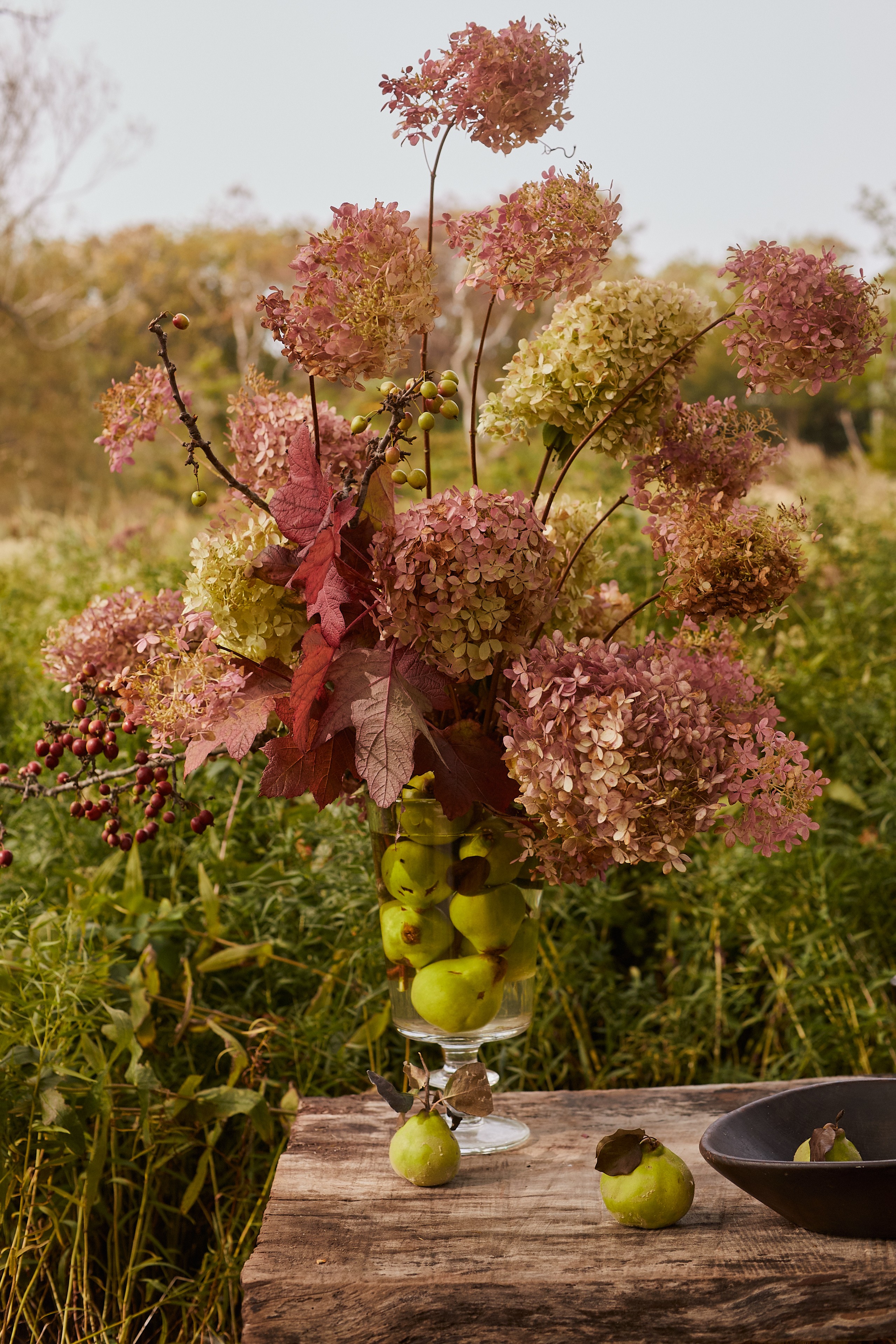
Hydrangea and electric green quince for The Financial Times story on Roman and Williams. Photo: Billal Taright